
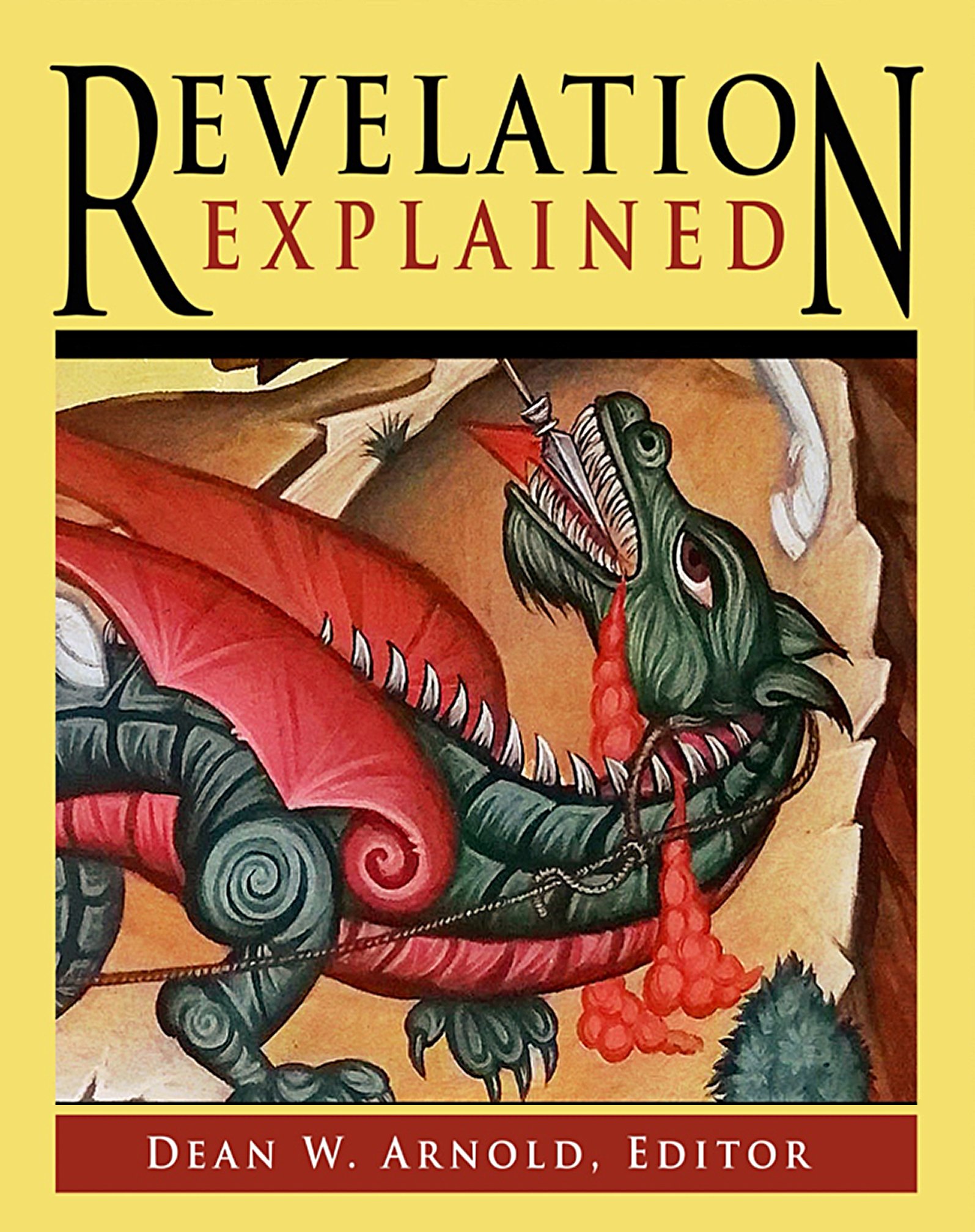
Is Revelation about the 1st Century? When was it written?
This article by Dean W. Arnold appears as an appendix to the first volume entlitled “Dragon” of the 3-volume commentary Revelation Explained: an Interpretation by James B. Jordan, edited by Dean W. Arnold. The appendix is entitled “On Preterism and the Date of Revelation.”
Audio version here.
Not about the Future?!
Christians today are programmed to always view Revelation in a futuristic context. Breaking out of this mindset is difficult. (It also allows for future interpretation, but not solely.) Before I discuss the precedent for a preterist (1) or near-fulfillment interpretation of Revelation and the case for an early dating, I will share my own reasons for embracing these views:
■ A near-fulfillment interpretation solves the frustration and embarrassment of wiggling out of Jesus's continuous promise that he is "coming soon." Jordan addresses this in the text, but I will echo here that he IS coming in the future. However, 2,000 years is not soon. However, he also came in the clouds of judgment in AD 70. That was soon. Both are true. This book is mystical and prophetic writing, and it contains layers of fulfillment. When we add near fulfillment to the far fulfillment, we do not feel sheepish when answering the "coming soon" question from a valid skeptic by saying, "Well, a day is like a thousand years."
■ The first three Gospels all provide a chapter on Jesus's predictions of the future, the "eschatalogical discourses," which include prophecies of the destruction of Jerusalem and the temple. John's Gospel does not have such a chapter, and it rings true for me that Revelation is his eschatalogical discourse and his recording of Christ's prediction of the events of AD 70.
■ Spending time on the near-fulfillment nature of Revelation—again, not the only interpretation of the book—brings to fore the glorious nature of what Jesus Christ accomplished at that time, not just in the by and by. He conquered the evil one, he fulfilled the law and the promises for Israel in the Church. He destroyed the old world and established the new heavens and new earth in his redeemed people. He judged those who, in his generation, murdered the prophets and the saints. He brought to conclusion the guardian roles of the great empires and established the true and final kingdom from the uncut stone rejected by the builders. The sons of God replace the angels as the leading lights of the cosmos. The saints under the altar are raised to the highest heavens above the sea of glass. He transformed (and transforms) his struggling church into a brilliant bride adorned with precious stones.
■ Jordan's literary acumen and artistic bent reveals a narrative for Revelation that can be understood, something the reader can grasp. It makes sense. You can read about much of it in the book of Acts. The reliable histories of the First Century make other parts clear. Otherwise, many readers in my opinion get frustrated after their first reading of Revelation (or they never get through it) and their eyes glaze over with the wild and sensational imagery. It is just too much, and they head back to more accessible terrain in the Gospels, epistles, Genesis, and the stories of David.
I have no problem with sober and sensible futuristic interpretations. However, they are few (and largely Orthodox, in my opinion), and they are usually brief. Why? Because a conscientious commentary must by necessity refuse conjecture and avoid the typical and abundant wild-eyed speculation of the uncircumspect, who are embarrassed within a decade—or at least have been for two thousand years. A futuristic interpretation is acting like a prophet. How many do you know that are accurate? I think I have heard of a few that have spent 30 years praying in a cave. Beyond that, I do not know of any personally.
However, studying Revelation based on what we know from the New Testament and from objective, documented history—just like we study the other books of the Bible—is a wonderful and worthwhile task providing reams of edifying material, even endless insights. Yes, these need to be presented by thoughtful and prayerful people and evaluated by the proper authorities. But you need not be in the category of the supernaturally gifted and clairvoyant. In other words, a near-fulfillment study of Revelation makes the book accessible.
In addressing the legitimacy of a preterist or near-fulfillment view, I will be addressing the issue from an Eastern Orthodox perspective, my faith tradition for 25 years after being raised in a Reformed evangelical home by a father with a doctorate in theology from Dallas Theological Seminary. I will rarely cite modern scholars but rather more ancient sources, and particularly those before the East-West split of the 11th Century. (2)
Regarding when Revelation was written, I do not expect to prove an early pre-AD 70 date. My goal is to show that there is no consensus view, thus allowing for the possibility of entertaining Jordan's interpretation. Admittedly, a late view of Revelation's date in the AD 90s has been prominent in both Orthodox and non-Orthodox circles, largely due to Eusebius's 4th Century translation of Irenaeus alluding to that date. We will examine that quote in detail later in this discussion.
Evidence for an Early Date
Regarding an early date, I first will note that the Orthodox Church's synaxarion,* or "Lives of the Saints," states that "in about the year 67 the Book of Revelation was written, known also as the 'Apocalypse,' of the holy Apostle John the Theologian." So we see right away that early views exist for the writing of Revelation. (3)
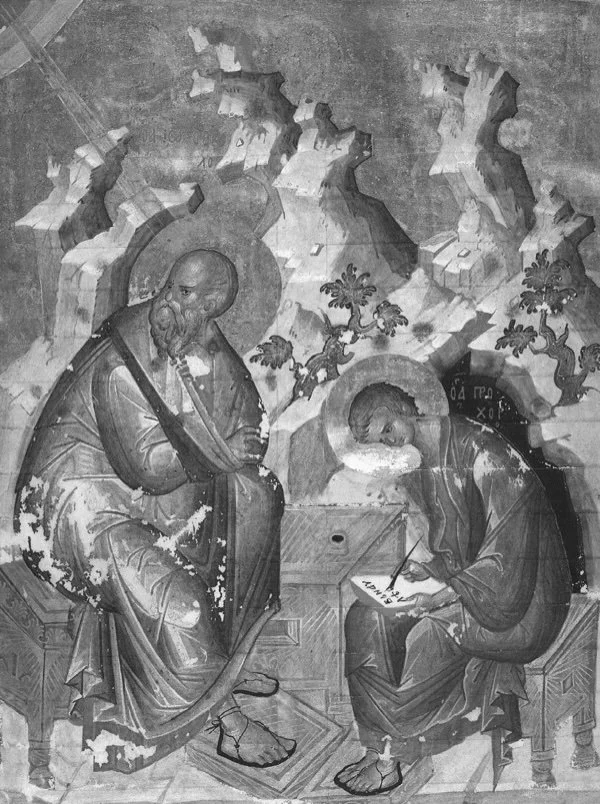
John wrote Revelation in AD 67 according to the Orthodox Synaxarion.
■ c. 150 - 350 - The Muratorian Canon provides one of the earliest lists of books considered to be biblical or canonical. It mentions Pius IV, Pope of Rome, c. 140-155, as "most recently in our time." (Full quote: "But Hermas wrote The Shepherd most recently in our time in the city of Rome, while bishop Pius, his brother, was occupying the chair of the church of the city of Rome.") (4) Regarding the date of Revelation, the Muratorian Canon makes this assertion: "The blessed apostle Paul himself, following the rule of his predecessor John, writes to no more than seven churches by name." (5) This indicates that Paul followed John's lead in writing to seven churches. If so, this demands a pre-AD 70 date for Revelation, as it is certain Paul died before the destruction of Jerusalem. This piece of evidence may also precede the statement of Irenaeus in AD 180.
■ AD 200 - While Irenaeus apparently provides a late date around AD 180, another early source near that time provides what looks to be an early date. Clement of Alexandria, a bishop born 20 years after Irenaeus, provides the following quote after naming John:
" . . . after the death of the tyrant he removed from the Island of Patmos to Ephesus." (6)
Some late date advocates identify the "tyrant" as Emperor Domitian, Irenaeus’s target. But another quote from Clement makes it clear he is speaking of the well-known tyrant Nero.
“For the teaching of our Lord . . . was completed in the middle of the times of Tiberius . . . and that of the apostles, embracing the ministry of Paul, ends with Nero." (7)
Tiberius reigned as Caesar during the life of Christ. And Nero was Caesar when the apostles' writings were completed—unless Clement forgot about the Apostle John.
Nevertheless, scholars for decades have contended that Domitian is a legitimate "tyrant" because of a large persecution of Christians in his reign. That view has waned, however, as noted by respected Orthodox author Stephen De Young, a late view advocate: "More recently, it has become clear that such generalized persecution did not occur at that time in Roman history." De Young sources Yale Professor Adela Yarbro Collins: "The evidence for persecution of Christians under Domitian is rather slight . . . There is insufficient evidence to warrant the conclusion that Domitian persecuted Christians as Christians." (8)
On the other hand, Nero was notorious as a tyrant in the ancient world. His contemporary Apollonius of Tyana (b. 4 BC) says Nero was "commonly called a Tyrant." (9) Juvenal, born in Nero's reign, calls him a "cruel tyrant," guilty of "bloody tranny." Tacitus records that Nero used "neither discrimination nor moderation" as he "put to death so many innocent men." (10) And he famously describes how Nero had Christians "nailed to crosses or set aflame, and, when the daylight passed away, they were used as nighttime lamps." (11)
Given these facts, I consider it acceptable to view Clement of Alexandria's testimony as a valid early date witness, one who is contemporary to Irenaeus.
■ c. AD 203 - Tertullian of Carthage writes in c. 203 about the great martyrs: "Peter suffers a passion similar to our Lord's, where Paul is crowned with the death like that of John [the Forerunner], where the apostle John afterward, submerged in boiling oil, suffered nothing, and is exiled on an island." (12)
It certainly sounds like a description of all three being persecuted by Nero, as we know that Peter and Paul were martyred in the late AD 60s. To help remove doubt, Jerome writes in 393: "Moreover, Tertullian relates that he [John] was sent by Nero into boiling oil." (13)
■ c. AD 230 - Major early church scholar Origen (d. 251) wrote that "John was still living at the time of Nero." This suggests he was not living after Nero. (14)
■ c. AD 370 - Another early witness is the Greek bishop Epiphanius of Cyprus. Around the year 370 he wrote that John "prophesied in the time of Claudius . . . the prophetic word according to the Apocalypse being disclosed." In another place he wrote that John wrote his Gospel "after this return from Patmos in the time of Claudius Caesar." (15) Claudius Caesar precedes Nero, but Epiphanius does witness to a belief in an early date. (16)
■ AD 400 - John Chrysostom, great teacher of the Eastern Church, says, "the war breaks out only after the apostles were dead." The war is identified as the AD 70 conflict two sentences before: "The Apostles [in] their parting from Jerusalem, when the state (of the Jews) was shown to be past remedy, when the war was close at hand." (17)
■ AD 411 - A Syrian martyrology dated 411 celebrates the death of "the apostles James and John at Jerusalem" on Dec. 27th. As Jerusalem was destroyed in AD 70, this adds evidence to an early date for John's Apocalypse. (18)
■ AD 508 - Polycarpus translated the New Testament into Syriac in 508. The preface for Revelation reads: "The Revelation, which was made by God to John the Evangelist, in the Island of Patmos, To which he was banished by Nero the Emperor." (19)
■ 10th Century: Greek Archbishop Arethas of Caesarea wrote a commentary on Revelation in the 10th Century that included the statement that "the devastation that has been brought against the Jews had not yet been inflicted by the Romans when the evangelist received these oracles." (20)
■ 11th Century: Byzantine Bishop Theophylact, author of the famous Orthodox synaxarion "The Prologue of Ochrid," wrote a commentary on the Gospel of John, noting that the author was "banished on the island of Patmos thirty-two years after the ascension of Christ into heaven." (21) Seeing that Christ ascended around the year AD 30, this places John's exile by Nero at the year AD 62.
Many more examples of early date testimony could be listed. (22) I hope these highlights can establish the idea that an early dating was not unknown in the early centuries of Christianity. Popular Orthodox figure Fr. Joseph Trenham, who uses preterist interpretations in some parts of his ten lecture series on Revelation, says, "Many people think that this book was written around the time of emperor Nero. . . Many others think that this book was written under emperor Domitian." He concludes: "There is no consensus." (23)
This list of testimonies involves "external evidence," documentation outside Revelation. However, many seek to add the weight of "internal evidence" to their arguments, what we learn from the words in Revelation itself. Jordan counts the internal evidence of Jerusalem still standing in Rev. 11.8 as a major proof for an early date. Many others say the temple standing in Rev. 11.1-2 is proof that the book was written before the temple was destroyed.
I have chosen not to emphasize internal evidence, as one man's literal temple not yet destroyed is another man's symbolic temple representing future apostate churches, etc.
However, it should be noted that scholars like Yarbro-Collins, previously cited, find a serious problem with the temple in Rev. 11. "The remarks are too concrete and specific to allow the theory that they were composed as allegory." She solves the problem by saying there is more than one writer. The author of Revelation, post-AD 70, used an earlier pre-AD 70 source for that part of Revelation. And, "the narrative about the two witnesses is also based on a source." (24) However, the modernist idea of an author other than the Apostle John is not an acceptable view for most traditionalists.
Examples of near-fulfillment interpretation
Even if Revelation was written before AD 70, an Orthodox approach to the book requires some tradition in the employment of First Century events as fulfillments of the prophecy. The following are examples:
■ AD 450 - A colleague of Augustine, Bishop of Carthage Quodvultdeus, writing from exile in Naples, provides a threefold meaning of the two witnesses from Revelation 11. The first is Moses and Aaron standing before Pharoah, the second "the apostles Peter and Paul martyred by the Roman emperor Nero," and the third Enoch and Elijah at the end of the world. (25)
■ c. AD 510 - Bishop Caesarius of Arles interprets the "Great Day of God" in Rev. 16.14 as "that great day when Jerusalem was besieged by Titus and Vespasian." (26)
■ c. 750 The Irish Reference Bible, a commentary on each book of scripture, lists (as does Jordan), the 7 kings of Rev. 17.10 as "Julius Caesar the first emperor . . . the sixth Nero, the seventh Otho. . . " Rev. 17.10 says of the first six kings "five have fallen, one is," so that places Nero as emperor during the time of Revelation's writing. (27)
■ c. 776 Beatus of Liebana, monk and theologian, also lists Nero as the sixth king for Rev. 17.10. (Julius, Augustine, Tiberius, Claudius, Galba, Nero, Otho.) A manuscript at Oxford of an anonymous 10th Century commentary also names Nero as the sixth king. (28)
■ Although not dealing with Revelation directly, John Chrysostom cites Nero in relation to the "mystery of lawlessness" in 2 Thessalonians 2.7: "'For the mystery of lawlessness doth already work.' He speaks here of Nero, as if he were the type of Antichrist." Jerome echoes Chrysostom's reference to Nero: "It is fulfilled in him in part." Theophylact of Ochrid agrees on the mystery of lawlessness: "He speaks of Nero, who was a figure of Antichrist." (29)
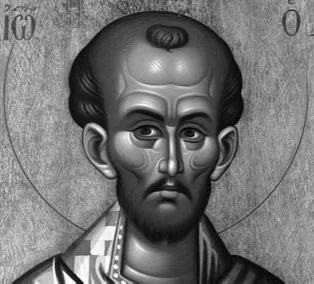
St. John Chrysostom
Andrew of Caesarea
Andrew, Archbishop of Caesarea, Cappadocia, wrote a commentary on Revelation in the 7th Century that became the standard Greek patristic commentary. Few to no commentaries had been written in the East to that point. The commentary is not long, but it is longer than the few Western commentaries that have survived from the first millennium. Andrew of Caesarea's writing is important in Orthodox circles.
Andrew's interpretation is primarily futuristic, but he also allows for preterism and interprets a few passages as being fulfilled in John's time. In Rev. 3.10, Christ tells the church of Philadelphia "I will keep you from the hour of trial which is coming on the whole world." Andrew says this regards "either the persecution of impious kings of Rome against the Christians which will come immediately at that particular time [or] the worldwide movement at the end of the age against those who believe in the Antichrist." (30)
On Rev. 7.2-3 regarding the servants of God receiving the seal of the living God, Andrew says, "Although this once happened in part to those of the Jews believing in Christ, who admirably evaded that population which was brought about on the city of Jerusalem by the Romans . . . this passage will have its ultimate fulfillment [with] Antichrist." (31)
Regarding the 144,000 first mentioned in Rev. 7.4, Andrew says, "This refers to those believers from the Jews who fled the siege of the Romans and equaled this number, or what is rather more likely, to those from the Jews who are saved at the consummation. . . . Either interpretation is acceptable." (32)
The translation of Andrew from the Greek by Eugenia Constantinou is considered the English standard. (33) She provides an insightful and lengthy introduction and notes that Andrew is "consistent with his expressed view that Revelation contains more than one level of meaning." Although Andrew saw severe war, famine, and earthquake in his own time, Constantinou writes that he "remarkably came to the conclusion that the end was not near." This is in contrast to Jordan's mostly accurate declaration (see p. 105) that nearly all futurists believe they are living in the end times. However, Andrew did believe "that he was living in the seventh and final age . . . described as remaining 'a little while.'"
Of most interest to me was Constantinou's assessment of Andrew's concern regarding "spiritual laziness and indifference" related to viewing Revelation as "describing past events," (even though he does this himself in a few places). Andrew says to do so means Revelation's "impact on prophecy as a genuine historical expectation and its usefulness to encourage spiritual vigilance are lost." (34)
I agree that a balance is in order. But if under-emphasizing the end times was a problem in Andrew's day, the opposite is true today. The Last Days madness of Hal Lindsay and the Left Behind industry of Tim LaHaye have forced an imbalance. In fact, their obsession with rebuilt temples, raptures, and an imminent end of the world may cause more laziness and indifference than the views that concerned Andrew.
Irenaeus points to a late date
While not the only witness to a late date for Revelation, by most accounts the leading testimony comes from Irenaeus of Lyons, a 2nd Century bishop and well known church father. He writes the following in "Against Heresies":
“We are not bold enough to speak confidently of the name of Antichrist. For if it were necessary that his name should be declared clearly at the present time, it would have been announced by who saw the revelation. For it was seen, not long ago, but almost in our generation, toward the end of the reign of Domitian." (35)
Caesar Domitian's reign ended in AD 96, so late date advocates place the writing of Revelation in the early AD 90s based on Irenaeus's account. The statement appears rather clear and straightforward, but there are a few ways to reconsider the quote that I will list here.
First of all, this portion of Against Heresies does not exist as an independent manuscript but is only known to us as a text included in the works of Eusebius, the well-known 4th Century church historian. And while Eusebius was happy to report Iranaeus's late date, he disagreed with him on the author. Eusebius believed a different John wrote Revelation. His own view of Iranaeus's authority was less than total. (36)
Perhaps the most intriguing of the early date responses to Irenaeus is the contention that Eusebius's Greek has been translated incorrectly. The pronoun in "For it was seen" is embedded in the greek word εωραθη or "yorathae," which can refer to either a person or a thing. The context gives a sense of "For he was seen" as a better choice. The passage is all about John revealing or not revealing the name of Antichrist, so therefore if "he was seen" in recent memory, then he could have told them the mystery. But he did not. The passage is not about the text of Revelation or its date. It is about John and those he interacted with.
The larger context of the quote adds to the point:
"This number is found in all the approved and ancient copies, and those who saw John face to face confirm it. [Then a few paragraphs later:] We are not bold enough to speak confidently of the name of Antichrist. For if it were necessary that his name should be declared clearly at the present time, it would have been announced by who saw the revelation. For it [or he] was seen, not long ago, but almost in our generation, toward the end of the reign of Domitian." (37)
So the larger context of Irenaeus's discussion on the mysteries of 666 has to do with those who interacted with him face to face. "For he was seen, not long ago" fits perfectly with the previous context.
Adopting such a view allows for Revelation to be written before AD 70 while believing that John himself lived and was seen up until the end of Domitian, or the early 90s. This view has some merit, and I believe is worth noting for our discussion. It is held by Kenneth Gentry, who is one of the top modern scholars on dating Revelation and who acknowledges that Irenaeus "is an indisputably important church father whose stature demands his hearing." (38)
Some have rightly highlighted the curious phrase at the beginning of the same quote regarding the approved and ancient copies of the book of Revelation. If the book was written "almost in our generation," that does not sound ancient. And if there are copies, then the original must be even more ancient. Some consider this phrase to point to a writing of Revelation closer to 120 years before Irenaeus rather than the traditional 90 years.
There exist a few other theories to allow for an early date without Irenaeus being inaccurate. Gentry passes along a theory that John may have suffered twice, both under Nero and Domitian. Also, Irenaeus may have been aware that Domitian had full consular authority for a time under Vespasian in AD 70. "His name was prefixed to epistles and edicts," according to Tacitus. Perhaps Irenaeus conflated this rulership with his later reign. (39) And finally, Francis Gumerlock cites the theory of Anglican Priest Kym Smith: not many copies of Revelation were distributed when it was written in AD 62, but it was later reissued on a wider scale, during Domitian's reign, and therefore Irenaeus tells us "it was seen" at that time. (40)
None of these theories are completely satisfying. An honest assessment of the possibilities must include acknowledging that Irenaeus may have been wrong on this point. While esteemed Church Fathers deserve high consideration, they are not infallible, as evidenced by the Church Fathers and saints who have been rebuked by various councils. This assertion of Irenaeus is not a theological one, but an historical memory. As 19th Century Scottish theologian James Moffat notes, "Irenaeus, of course, is no great authority himself on matters chronological." (41)
We see this in another place where Irenaeus discusses the age of Jesus.
"They [the Gnostics], however, that they may establish their false opinion…maintain that He preached for one year only, and then suffered in the twelfth month. [In speaking thus,] they are forgetful to their own disadvantage, destroying His whole work, and robbing Him of that age which is both more necessary and more honorable than any other; that more advanced age, I mean, during which also as a teacher He excelled all others. Now, that the first stage of early life embraces thirty years, and that this extends onwards to the fortieth year, everyone will admit; but from the fortieth and fiftieth year a man begins to decline towards old age, which our Lord possessed. (42)
This appears to be an assertion that Christ lived to be over 40 years old, if not 50. The quote is rather strange, but other statements from Irenaeus confirm his inaccuracies on such matters.
“Our Lord was born about the forty-first year of the reign of Augustus.” (43)
This places Jesus's birth around the year AD 14. In another place Irenaeus says, "Pontius Pilate, the governor of Claudius Caesar … condemned Him to be crucified.” (44) Claudius reigned from 41 to 54, several years removed from the accepted date of the crucifixion and the established fact that the event took place under Tiberius, not Claudius.
In Conclusion
Whether Irenaeus was right, wrong, or misunderstood, I trust I have shown in this treatment that more than one tradition on the date of Revelation existed in the early church. There is no consensus. As Gumerlock concludes (quoting Lipinski), Irenaeus "may have overshadowed but did not 'completely eliminate the more ancient tradition.'" (45)
However, where I believe we can indeed find consensus for Irenaeus's testimony is in his larger point, that John intended to keep the mystery of 666 just that—a mystery. In this light, Jordan's interpretation of the enigmatic number leans, in my opinion, toward a more broad, multi-leveled approach to the mystery, rather than to a single candidate in John's day or ours.
And while John apparently intended to be cryptic, it would not be unlike the One who inspired him to be cryptic as well—to keep the exact answer to dating Revelation or how to interpret it a matter unable to be fully grasped.■
Endnotes
1. Technically, the term is "partial-preterism," as full preterists believe the second coming also occurred in AD 70. This heretical fringe group is rejected by Jordan and his colleagues, and, more importantly, by the Nicene Creed: "And he shall come again to judge the living and the dead."
2. From the citations below it will be clear that I lean primarily on Dr. Ken Gentry's Before Jerusalem Fell (Victoria Hope Publishing, Fountain Inn, SC, 2010) and Dr. Francis (Frank) Gumerlock's Revelation and the First Century: Preterist Interpretations of the Apocalypse in Early Christianity, (American Vision Press: Powder Springs, GA, 2012) for my primary references. Both authors have graciously responded to several of my questions via email.
3. Reference Book for Clergy-Servers [Nastol’naya Kniga Svyaschennosluzhitelya] published by the Moscow Patriarchate, Moscow 1978 & 1979. Translated by Fr. Stephen Janos, 1997-2001. See https://www.oca.org/saints/lives/2023/09/26/102731-repose-of-the-holy-apostle-and-evangelist-john-the-theologian
4. F. F. Bruce, The Books and the Parchments, 3rd ed. (Westwood, NJ: Revell, 1963), p. 109. According to James J. L. Ratton, the relevant portion of this fragment was published by Muratori in Antiq. Ital., 3:854. See Ratton, The Apoclypse of St. John (London: R. & T. Washboume, 1912), p. 28. It is presently housed in the Ambrosian Library of Milan. It is an eighth century palimpsest and is designated: Cod. Ambros. J 101 sup. Cited in Kenneth L. Gentry, Jr., Before Jerusalem Fell (Victoria Hope Publishing, Fountain Inn, SC, 2010), p. 93-94. Hereafter, "cited in Gentry."
5. Ibid. See also https://en.wikisource.org/wiki/Ante-Nicene_Fathers/Volume_V/Caius/Fragments_of_Caius/Canon_Muratorianus
6. G. W. Butterworth, Clement of Alexandria (London: Heinemann, 1919), pp. 356ff. Cited in Gentry, p. 68.
7. Clement of Alexandria , Miscellanies [or Stromata], 7:17. Cited in Gentry.. See also https://www.newadvent.org/fathers/02107.htm
8. Fr. Stephen De Young, "When and Where was Revelation Written?" Ancient Faith Ministries, July 19, 2021; Adela Yarbro-Collins, "Dating the Apocalypse of John," Biblical Research 26 (1981), p. 42.
9. Philostratus, Life of Apollonius, 438. Cited in John A. T. Robinson, Redating the New Testamsnt (Philadelphia: Westminster, 1976), p. 235, from J. S. Phillimore (Oxford, 1912) 2:38. Cited in Gentry, p. 70.
10. Juvenale, Satires, 7:225; Seutonius, Nero, 7.1. Both cited in Gentry.
11. Tacitus, Annals, XV, 44.
12. Tertullian, De praescriptione haereticorum, 36. CCSL 1:216-217. Translation from Latin by Francis Gumerlock. Cited in Francis X. Gumerlock, Revelation and the First Century: Preterist Interpretations of the Apocalypse in Early Christianity (American Vision Press: Powder Springs, GA, 2012), p. 42. Hereafter, "cited in Gumerlock."
13. Jerome, Against Jovinian, 1.26. Cited in Gumerlock, p. 42, who notes: "I realize that elsewhere in Jerome’s corpus he states the Domitian theory for the date of Revelation."
14. Origen, In Lucam, Fragment 9. The Greek text with French translation is in E. Lipinski, “L’apocalypse et le martyre de Jean à Jerusalem,” Novum Tes- tamentum 11:3 (July 1969): 225–232 at 227. Cited in Gumerlock, p. 43.
15. Epiphanius of Salamis, Panarion [often referred to Against Heresies], 51.12, 33. PG 41:909 and Panarion 51.12.2. Both cited in Gumerlock, p. 29.
16. His position is echoed by mid 6th Century Portugese bishop Apringius of Beja, "Claudius Caesar . . . commanded that John, the apostle of our Lord Jesus Christ, be transferred into exile . . . to the island of Patmos." Apringius, Tractate on the Apocalypse. On Rev. 1:9. CCSL 107:39. Cited in Gumerlock, p. 30.
17. John Chrysostom, Homilies on the Acts of the Apostles. Homily 25, A Select Library of the Nicene and Post-Nicene Fathers of the Christian Church. Philip Schaff, ed., 1st series, 11: 164. Cited in Gumerlock, p. 47. See also https://www.newadvent.org/fathers/210125.htm.
18. Culpepper, John, the Son of Zebedee, 172. See also Donald Guthrie, New Testament Introduction , 3rd ed. (Downers Grove, IL: InterVarsity, 1970), 261. Cited in Gumerlock, p. 47.
19. James Murdock, trans. The New Testament; or, The Book of the Holy Gospel of our Lord and our God, Jesus the Messiah. A Literal Translation from the Syriac Peshitto Version (Boston, MA: Hastings, 1852), 442. Cited in Gumerlock, p. 38.
20. Arethas of Caesarea in Cappadocia, Commentary on Revelation. On Rev. 7:4–8. PG 106:606. Cited in Gumerlock, p. 44.
21. Theophylact of Ochrida, On the Gospel of John, Preface. PG 123:1133–34. Cited in Gumerlock, p. 39.
22. For more, see Gentry pp. 86-109 and Gumerlock pp. 21-51.
23. Fr. Josiah Trenham, Apocalypse Soon, An Exposition of the Revelation of St. John, Lecture One, Patristic Nectar Publications, (Riverside, CA, 2015).
24. Yarbro-Collins, ibid.
25. Quodvultdeus of Carthage, Book on the Promises and Predictions of God. Dimidium temporis, XIII. CCSL 60: 207l. Cited in Gumerlock, p. 117-118.
26. Caesarius of Arles, Exposition of the Apocalypse of Saint John, Homily 13. Germain Morin, ed., Sancti Caesarii Arelatensis opera varia, Vol. 2 (Maretioli [Bruges, Belgium]: Desclée, 1942), 255. Cited in Gumerlock, p. 149.
27. Gerard MacGinty, ed., The Reference Bible, Das Bibelwerk: Pauca problesmata de enigmatibus ex tomis canonicis, nunc prompta sunt Praefatio et libri de Pentateucho Moysi. CCCM 173 (Turn- hout: Brepols, 2000). Cited in Gumerlock, p. 153.
28. Beatus of Liébana, Commentarius in Apocalypsin, IX. In E. Romero- Pose, ed., Sancti Beati a Liebana commentarius in Apocalypsin, Vol. Alterum (Rome: Typis Officinae Polygraphicae, 1985), 282–3. Cited in Gumerlock, p. 154.
29. John Chrysostom, Homilies on Thessalonians, 4. On 2 Thess. 2. A Select Library of the Nicene and Post-Nicene Fathers of the Christian Church. Philip Schaff, ed, 1st series, 13: 389; Jerome, Epistle 121 to Algasia. PL 22: 1037; Theophylact, Exposition on 2 Thessalonians. On 2 Thess 2:7. PG124: 1342. Cited in Gumerlock, p. 164, 165, 167.
30. Andrew of Caesarea, Commentary on the Apocalypse, (Fathers of the Church Series), Ed., Eugenia Scarvelis Constantinou, Catholic University of America Press (May 18, 2017), p. 76.
31. Gumerlock's translation from the Latin. Andrew of Caesarea, Commentary on the Apocalypse. PG 106: 278. Cited in Gumerlock, p. 93. Constantinou translates the passage, "If this has partially taken place a long time ago" and "this will definitely happen [with] Antichrist." p. 103.
32. Gumerlock's translation from the Latin. Ibid. Cited in Gumerlock, p. 99. The last line is translated by Contantinou as, "Neither of these is unacceptable."
33. Thomas Hopko, the late Dean of St. Vladimir's Orthodox Seminary, calls Constantinou a "wonderful biblical scholar." Regarding Andrew, he says, "In the patristic era, there’s only one complete commentary that I know of, by a certain Andrew of Caesarea—however, I do not know who he is. [Laughter] He is called 'saint' in some secondary literature, but I never found him in the calendar. No one knows quite who he is." In his three-lecture series on Revelation, Hopko declines to discuss the date of the book. (Thomas Hopko, "A Walk through the Apocalypse." Lecture one. Ancientfaith.com, March 6, 2012.)
34. Constantinou, Introduction to Andrew of Caesarea, Commentary on the Apocalypse, (Fathers of the Church Series), Ed., Eugenia Scarvelis Constantinou (Washinton DC: Catholic University of America Press, 2017), p. 19, 12, 38, 14.
35. Eusebius, Ecclesiastical History, 5:8:5-6. Cited from Philip Schaff and Henry Waee, eds., A Select Libraty of Nicene and Post-Nicene Fathers of the Christian Church: Second Series, 14 vols. (Grand Rapids: Eerdmans, [1890] 1986) 1:222. Cited in Gentry, p. 52.
36. Ecclesiastical History, 7:25: 16. Cited in Gentry, p. 54.
37. Eusebius, Ecclesiastical History, 5:8:5-6. Cited in Gentry, 51-52.
38. Gentry, p. 45.
39. Gentry, p. 66-67.
40. Gumerlock, p. 33.
41. James Moffatt, The Revelation of St. John the Diuine, in W. R. Nicoll, ed., Englishman’s Greek Testament, vol. 5 (Grand Rapids: Eerdmans, rep. 1980), pp. 295-296. Cited in Gentry, p. 61.
42. Irenaeus, Against Heresies, 2.22.5-6. Ante-Nicene Fathers, eds. Alexander Roberts, James Donaldson, Philip Schaff. See also https://www.ccel.org/ccel/schaff/anf01.ix.iii.xxiii.html
43. Irenaeus, Against Heresies, 3.21.3. See also https://www.newadvent.org/fathers/0103321.htm
44. Irenaeus, The Demonstration of the Apostolic Preaching, 74. Popular Patristic Series, (St. Vladimir's Seminary Press, NY), 2003. See also https://www.newadvent.org/fathers/0103321.htm.
45. E. Lipinski, “L’apocalypse et le martyre de Jean à Jerusalem,” Novum Tes- tamentum 11:3 (July 1969) p. 231. Cited in Gumerlock, p. 48.